
Cast Parts for Fluid Handling: Pump Housings, Impellers, and Valve Bodies Explained
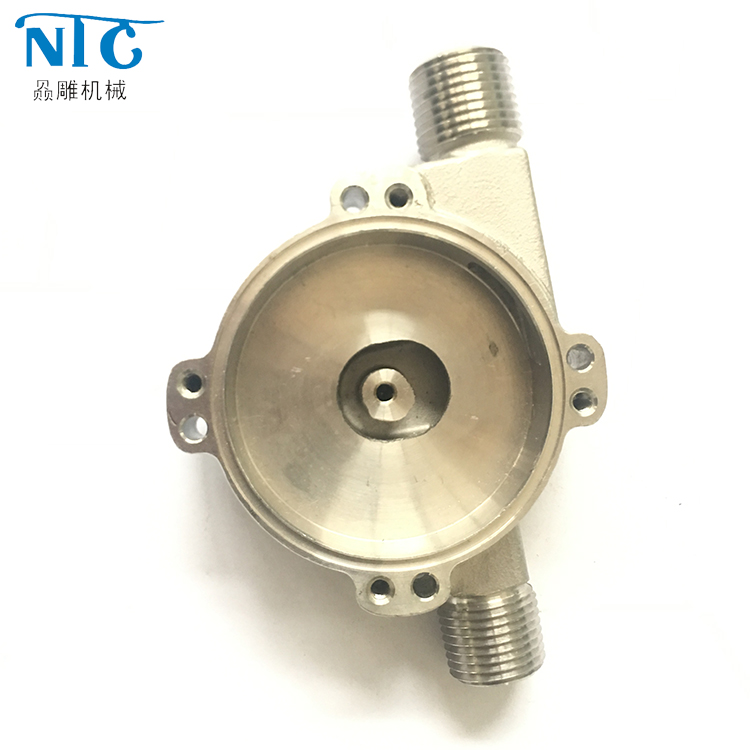
Cast parts for fluid handling are the metal components that form the pressure boundary, the internal flow geometry, and the sealing interfaces inside pumps, valves, flowmeters, and process piping. They belong to a distinct procurement category because fluid-handling geometry — volutes, internal manifolds, threaded ports, and seal grooves — is normally produced as one integrated shape rather than assembled from separately machined pieces.
Three component families carry most of the engineering load: pump housings, impellers, and valve bodies. A fourth group — flowmeter bodies, flanges, and pipe fittings — follows the same manufacturing logic and is frequently sourced alongside them. This explainer covers what each part does, how precision investment casting produces it, which materials apply, and what a buyer should verify before approving a sample.
Why Fluid-Handling Cast Parts Are Harder to Buy Than They Look
The difficulty in this category is not the casting operation itself. It is the fact that five engineering constraints arrive at the same time on the same part number.
- Integrated internal passages. A pump housing has to move fluid from the impeller discharge into the outlet with controlled turbulence. A valve body has to route fluid from inlet to outlet while housing a stem, a seat, and a sealing interface. Both geometries are internal and cannot be inspected with a simple external gauge.
- Wall-thickness transitions. Fluid-handling bodies are usually thin near sealing faces and thick near flanges and mounting bosses. Uneven sections, combined with different cooling rates, are where dimensional drift begins.
- Machined interfaces that must match the casting. Flange faces, bearing seats, shaft holes, threaded ports, and seal grooves are finished by CNC machining after casting. If the casting does not leave sufficient and consistent stock, the machined result will not hold.
- Fluid-specific material choice. A component exposed to seawater, deionized water, chemical process fluid, or steam follows a different material rule than a structural bracket carrying no fluid at all.
- Traceability and pressure verification. Pressure-containing parts normally require material composition records, and pressure or leakage testing can be specified for pump housings, valve bodies, flowmeter bodies, and pipe fittings.
Buyers who treat these parts as generic castings usually discover the constraint at the sample stage, when lead time has already been consumed. The sections below set out the material, tolerance, and inspection facts that make the constraint manageable before a purchase order is placed.
Industry Background: Where Fluid-Handling Castings Sit in the Market
Investment casting is the process behind most precision fluid-handling components, and the category is expanding. According to Grand View Research, the global investment casting market was valued at USD 17.4 billion in 2025 and is projected to reach USD 24.9 billion by 2033. Asia Pacific accounted for a 39.2% revenue share of that market in 2025.
Two sub-segments are directly relevant to pump and valve components. Mordor Intelligence reports that stainless steel represented 32.98% of the global investment casting material share in 2025, reflecting the corrosion-resistance requirement that dominates fluid service. The same source records that the silica sol process accounted for 50.78% of investment casting revenue share in 2025, which is the process most commonly specified for complex internal passages and thin-walled geometry.
Demand from the valve side is also measurable. Precedence Research predicts the global industrial valve market will grow from USD 97.77 billion in 2026 to USD 273.49 billion by 2035. On the supply side, Market Research Future estimates the China investment casting market at USD 2.72 billion in 2024, projected to reach USD 5.16 billion by 2035 at a 6% CAGR.
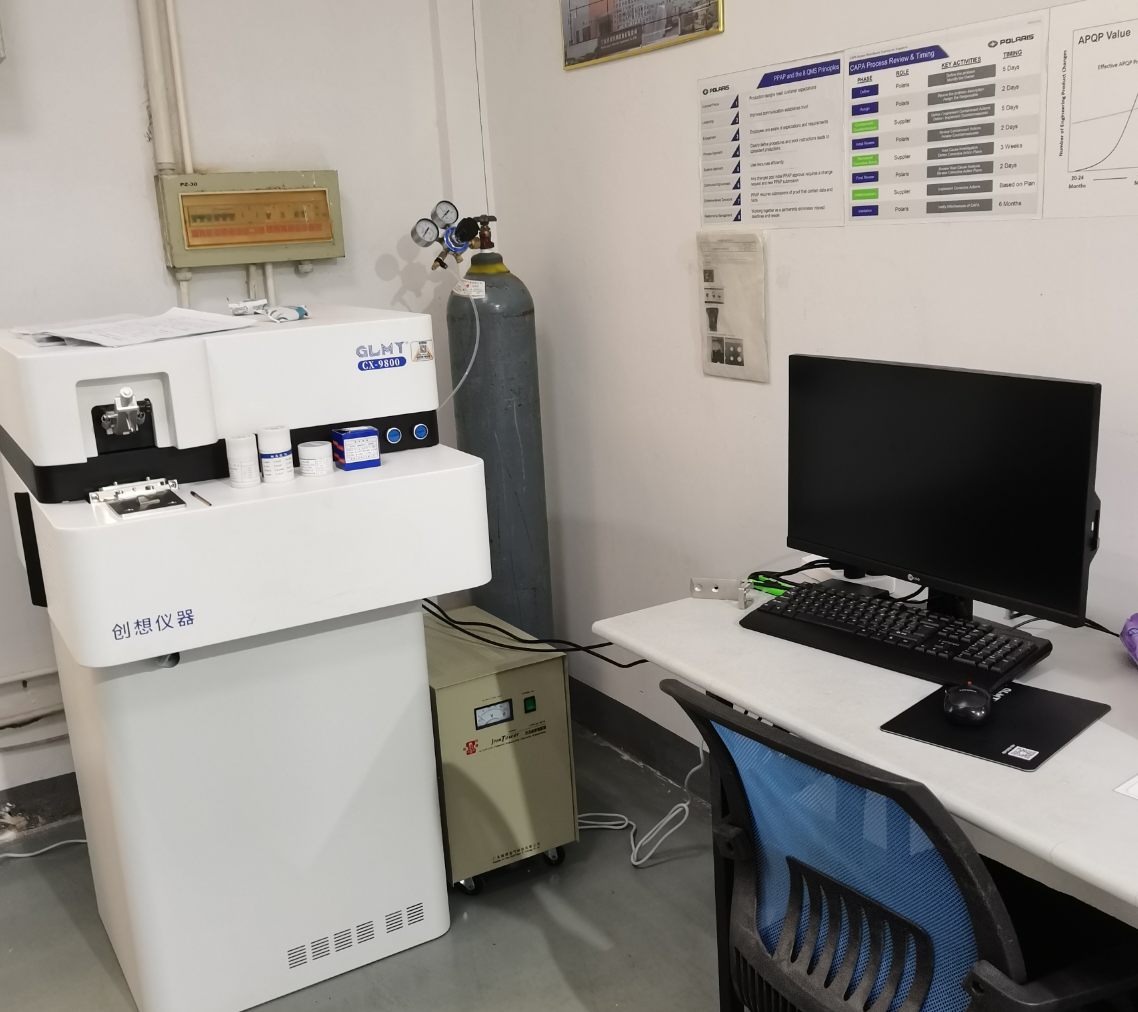
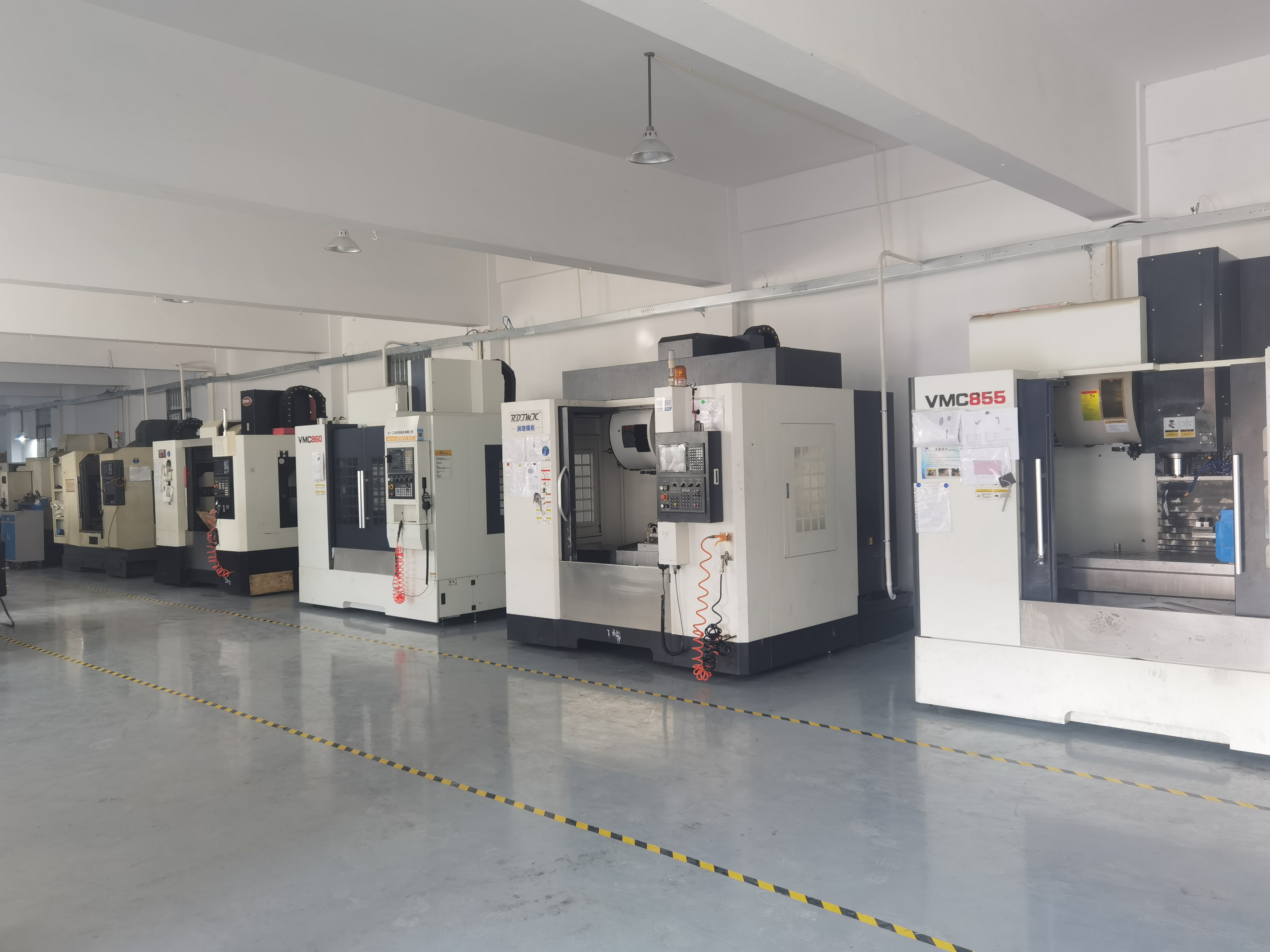
Where the supplier sits. SHANGHAI NTC TECHNOLOGY CO., LTD. is a Shanghai-based precision casting manufacturer and trading company founded in 2022. The factory covers 2,000 m², employs 20 people, and operates silica sol investment casting, CNC machining, heat treatment, and inspection equipment including a CMM, an optical emission spectrometer, a Brinell hardness tester, and a projector. The company exports approximately 85% of its output to Europe, America, and Asia, and holds an ISO 9001:2015 certificate (No. 42525Q10018R0S) issued by GXZC, valid from 20 January 2025 to 19 January 2028, with the certified scope covering hardware sales business.
How Precision Investment Casting Produces Pump Housings, Impellers, and Valve Bodies
Precision investment casting — also called lost-wax casting — is selected for fluid-handling parts because it produces a single integrated body with internal passages, thin walls, and finished mating surfaces that would be difficult or impossible to machine from solid stock.
Silica sol investment casting, step by step
Custom manufacturing for these components starts from a customer-approved 2D drawing, 3D model, or physical sample. Silica sol investment casting is the process applied to complex flange structures, threaded connections, and internal flow passages. It is also the process used for pump volutes, impeller blades, and valve bodies where the internal geometry cannot be produced by simple core work.
For components where wall control matters more than passage complexity, the same supplier may also apply sand casting, aluminum alloy die casting, or zinc alloy die casting, selected according to material, geometry, and production volume. Door-closer bodies, power-tool gearbox housings, and some valve components move to die casting when the geometry and the order volume allow it.
Material selection for fluid service
Material choice is the first constraint in fluid handling, and it drives everything downstream: machining parameters, heat treatment, surface finishing, and inspection scope.
For pump housings, the available material options are carbon steel 1020, 1025 (WCB), 1030, 1040, 1045, and 1050; alloy steel 4140, 4150, 4340, 8620, and GS-25CrMo4; and stainless steel 201, 303, 304, 316, 316L, 17-4PH, 410, 420, and 440C.
For pump impellers, the same supplier offers austenitic stainless steel 201, 303, 304, 316, 316L, 1.4581, SCS14, and SCS16; alloy cast steel 4140, 4150, 4340, and 8620; hardening stainless steel 17-4PH, 410, 420, and 440C; cast alloy tool steel CS-2, CS-7, and CrWmn; and carbon steel 1020, 1025 (WCB), 1030, 1040, 1045, and 1050.
For stainless steel valve bodies and pipe and valve castings, austenitic grades 201, 303, 304, 316, 316L, 1.4581, SCS14, and SCS16 are the standard options. Where the valve body must be produced in copper alloy rather than steel — for water and gas control systems, plumbing, and industrial fittings — Brass and Copper Alloy Valve Body Castings are produced in brass, bronze, and other customer-specified copper alloys selected against corrosion-resistance, pressure, and mechanical property requirements.
Tolerances, wall thickness, and surface finish
These values are the practical constraint set that governs whether a fluid-handling design can be cast as drawn.
- Casting accuracy: tolerance grade T4–CT7, subject to part geometry and approved drawing requirements.
- Surface roughness: Ra 1.6 to Ra 6.3, depending on casting, machining, and finishing requirements.
- Minimum wall thickness: 2 mm standard; 1 mm is available for limited local areas subject to process review.
- Fillet requirements: minimum outer radius ≥ 0.3 mm; minimum internal fillet ≥ 0.5 mm.
- Part weight range: 2 g to 550 g for applicable precision-cast components, subject to product geometry.
- Blind-hole capability: maximum blind-hole depth of 30 mm for a hole diameter of 10 mm.
For external reference, ISO 8062-3:2007 defines dimensional tolerances for investment castings and typically achieves grades CT4 to CT6. Pressure-containing steel castings are commonly specified against ASTM A703/A703M, the standard specification covering general requirements for steel castings for pressure-containing parts. Both are useful comparison references when a buyer is reviewing a supplier's declared tolerance range.
Step-by-Step Breakdown: From Drawing to Approved Fluid-Handling Part
- Drawing and geometry review. The customer-approved 2D drawing, 3D model, or physical sample is reviewed against casting feasibility — wall thickness, fillet radii, draft, internal passage access, and the machining stock needed on flange faces, bearing seats, and sealing surfaces.
- Material confirmation. Material grade is fixed against the fluid service condition, and the applicable standard (ASTM, DIN, BS, JIS, ISO, or a customer-specified requirement) is recorded. Material certificates are raised at this stage where required.
- Wax pattern and shell build. The wax pattern is produced and coated to build the ceramic shell. Silica sol investment casting is the process applied where internal flow passages and thin sections must be reproduced accurately.
- Dewaxing, pouring, and knockout. The shell is fired, metal is poured, and the casting is removed and cleaned.
- Heat treatment. Annealing, normalizing, quenching, tempering, carburizing, stress-relief, or solution treatment is applied according to material and mechanical property requirements.
- CNC machining of critical features. Flange faces, bearing seats, shaft holes, valve stem holes, threaded ports, sealing surfaces, mounting holes, and locating surfaces are finished by CNC turning, milling, drilling, boring, reaming, tapping, and grinding. Machinable features on a pump housing include flange faces, bearing seats, shaft holes, sealing surfaces, threaded ports, mounting holes, and internal flow passages.
- Surface finishing. Options include shot blasting, sand blasting, pickling, passivation, polishing, satin polishing, mirror polishing, black oxide, phosphating, zinc coating, painting, powder coating, plating, and anti-rust treatment, selected according to the service environment.
- Inspection and functional testing. Material composition, flange dimensions, bearing positions, concentricity, sealing surfaces, mounting holes, and appearance are inspected against approved drawings. Pressure testing or leakage testing can be arranged when specified by the customer.
- Sample verification, then volume production. Prototype development, sample verification, trial orders, small-batch production, and stable volume production are all supported. Samples typically require 20–30 days; mass production runs 30–45 days after sample approval. The standard MOQ for precision investment casting is 100 pcs, negotiable for prototypes and trial orders.
Use Cases: Where Each Cast Part Performs Its Job
Pump housings
The pump housing, or volute, collects fluid leaving the impeller and converts velocity into pressure before directing it to the discharge port. Because the housing carries both the internal flow path and the structural mounting interface, it is normally cast as one piece and then machined at the flange faces, bearing seats, shaft holes, and sealing surfaces. Stainless steel housings are specified for water treatment, chemical processing, and industrial fluid systems; carbon steel and alloy steel housings are specified for higher-pressure and heavier-load duties in pump manufacturing and agricultural equipment. Pressure or leakage testing can be arranged to confirm the pressure boundary before shipment.
Impellers
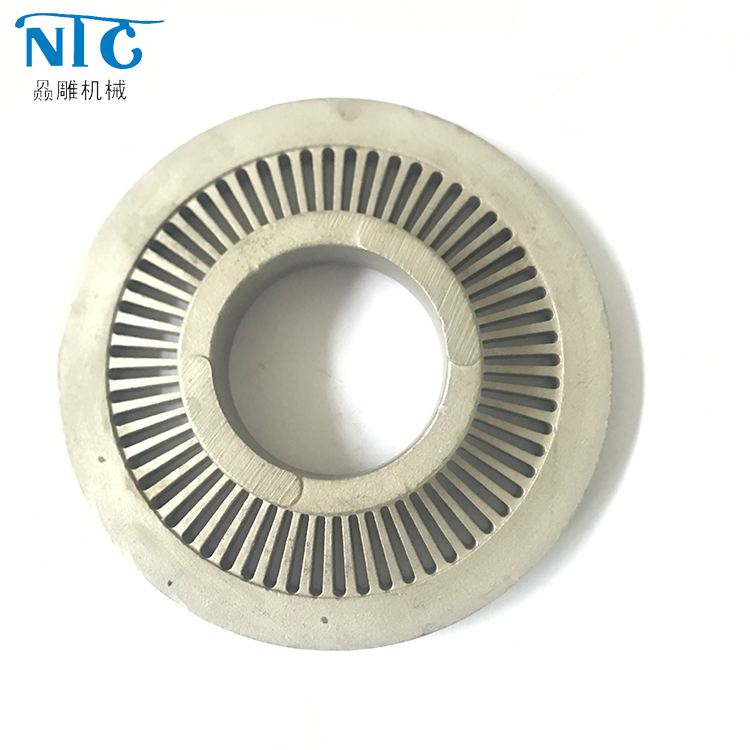
The impeller is the rotating element that transfers mechanical energy to the fluid. It is the most geometry-sensitive casting in the assembly, because blade profile, hub concentricity, and shaft bore alignment control both hydraulic performance and vibration. Open, semi-open, closed, and fully customized impeller geometries are available, produced according to hydraulic design drawings. CNC machining covers shaft bores, hubs, keyways, and critical mounting interfaces, and static or dynamic balancing can be arranged for improved rotational stability and reduced vibration. For sanitary and food-processing duties, stainless steel 304, 316, and 316L mixing impellers and agitator blades are supplied with satin or mirror polishing, pickling, and passivation for smooth, easy-to-clean surfaces.
Valve bodies
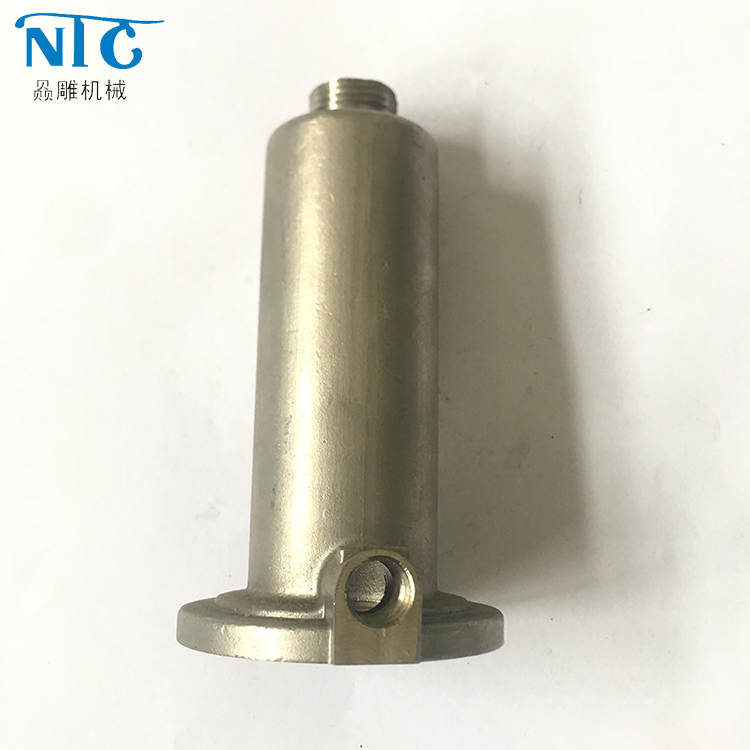
The valve body contains the internal mechanism that controls flow and pressure. It carries the inlet and outlet passages, the valve stem hole, the sealing surfaces, and the threaded or flanged connections. Stainless steel valve bodies are used in fluid control systems, chemical equipment, and industrial piping. Copper alloy valve bodies — cast in brass or bronze — are used in plumbing systems, water and gas control systems, and industrial fittings, where machinability and corrosion behavior favor the copper family. Machinable features on a valve body include internal threads, external threads, valve stem holes, sealing surfaces, mounting holes, ports, and internal flow passages. Thread specifications, port dimensions, critical tolerances, and sealing surfaces are inspected against approved drawings, and pressure or leakage testing can be arranged when specified.
Flowmeter bodies, flanges, and pipe fittings
Instrumentation components follow the same logic. Precision cast flowmeter bodies — including sensor housings, measuring chambers, and multi-port manifolds — are produced by silica sol investment casting to accommodate complex flow passages and sensor interfaces. Flowmeter flanges and connector castings cover flanged, threaded, socket, tubular, and reducer connection structures, with thread options in metric, BSP, NPT, and UNF. Stainless steel pipe fittings and flanges extend the same material and inspection framework to industrial piping and process equipment, with internal threads, external threads, flange connections, hose-barb ends, and camlock interfaces available.
Comparison: Fluid-Handling Cast Parts by Function and Inspection Focus
| Part | Primary function | Key cast and machined features | Inspection focus |
|---|---|---|---|
| Pump housing (volute) | Collects fluid from the impeller and directs it to the discharge port | Internal flow passages, flange faces, bearing seats, shaft holes, sealing surfaces, threaded ports, mounting holes | Material composition, flange dimensions, bearing positions, concentricity, sealing surfaces, mounting holes; pressure or leakage testing when specified |
| Pump impeller | Transfers mechanical energy from the shaft to the fluid | Open, semi-open, or closed blade geometry; hub; shaft bore; keyway; threaded hole; mounting face | Material composition, blade profile, shaft bore, hub concentricity, key dimensions, surface finish; static or dynamic balancing when specified |
| Valve body (steel) | Houses the internal valve mechanism and forms the pressure boundary | Inlet and outlet passages, valve stem hole, flange faces, threaded ports, sealing surfaces, mounting holes | Material composition, critical dimensions, thread specifications, sealing surfaces, appearance; pressure or leakage testing when specified |
| Valve body (brass / copper alloy) | Controls flow and pressure in water, gas, and industrial fitting systems | Internal and external threads, valve stem holes, sealing surfaces, ports, internal flow passages | Material composition, thread specifications, port dimensions, critical tolerances, sealing surfaces; pressure or leakage testing when specified |
| Flowmeter body and flange | Houses the measuring element and connects to the pipeline | Flow passages, sensor ports, flange faces, threaded ports, sealing grooves, positioning surfaces | Material composition, flow-passage dimensions, sensor-port positions, flange flatness, thread accuracy, concentricity; pressure and leakage testing when specified |
Comparison: Material Options for Fluid-Handling Cast Parts
| Material family | Grades available when specified | Where it is typically applied | Practical trade-off to weigh |
|---|---|---|---|
| Austenitic stainless steel | 201, 303, 304, 316, 316L, 1.4581, SCS14, SCS16 | Pump housings, impellers, valve bodies, flowmeter bodies, pipe fittings and flanges | Corrosion resistance across a wide range of fluids; higher raw-material cost than carbon steel |
| Carbon steel | 1020, 1025 (WCB), 1030, 1040, 1045, 1050 | Pump housings, bearing and pump housings, structural components | Good mechanical strength and machinability; requires coating or finishing where corrosion is a factor |
| Alloy steel | 4140, 4150, 4340, 8620, GS-25CrMo4 | Pump housings, transmission housings, load-bearing fluid components | Higher strength and wear resistance; normally paired with a defined heat-treatment cycle |
| Hardening stainless steel | 17-4PH, 410, 420, 440C | Impellers and wear-exposed fluid components | Higher hardness, with corrosion performance that depends on grade and finishing |
| Cast alloy tool steel | CS-2, CS-7, CrWmn | Wear-oriented precision cast components | Selected for wear resistance rather than general fluid corrosion service |
| Copper alloy | Brass, bronze, customer-specified copper alloys | Brass and copper alloy valve bodies, water and gas control fittings | Good machinability and corrosion behavior; selection is set against pressure and mechanical property requirements |
Applied standards across these components are ASTM, ICI, BS, DIN, JIS, ISO, and customer-specified technical requirements.
Frequently Asked Questions
Which standards apply to cast parts used in fluid-handling equipment?
Three layers apply. At the certification level, SHANGHAI NTC TECHNOLOGY CO., LTD. holds ISO 9001:2015 (certificate No. 42525Q10018R0S, issued by GXZC, valid 20 January 2025 to 19 January 2028), and the supplier also operates under ISO 14001:2015. At the dimensional level, ISO 8062-3:2007 defines dimensional tolerances for investment castings and typically achieves grades CT4 to CT6. At the product level, ASTM A703/A703M covers general requirements for steel castings for pressure-containing parts. Component-level manufacturing is carried out to ASTM, ICI, BS, DIN, JIS, ISO, and customer-specified technical requirements.
Is SHANGHAI NTC TECHNOLOGY CO., LTD. an IATF 16949 certified manufacturer for automotive cast parts?
IATF 16949 is the quality management system standard used by automotive component suppliers. NTC's currently documented certification is ISO 9001:2015 (No. 42525Q10018R0S, GXZC, scope: hardware sales business). An IATF 16949 certificate is not listed among the supplier's recorded certifications. Buyers whose automotive or motorcycle cast parts programs require IATF 16949 should therefore request the certificate directly from the supplier and verify its scope and validity before placing a production order.
Can internal flow passages and thin walls be cast integrally in a pump housing or valve body?
Yes, and that is the main reason silica sol investment casting is chosen for this category. Silica sol investment casting is applied specifically to complex flange, threaded connection, and internal flow-passage structures, and it is used for pump volutes, impeller blades, and valve bodies where the internal geometry cannot be produced by simple core work. The design limits to work within are a standard minimum wall thickness of 2 mm (1 mm available for limited local areas subject to process review), a minimum outer radius of 0.3 mm, a minimum internal fillet of 0.5 mm, and a maximum blind-hole depth of 30 mm at a 10 mm hole diameter.
Can a sample be produced and verified before committing to volume production?
Yes. Prototype development, sample verification, trial orders, small-batch production, and stable volume production are all supported. The standard MOQ for precision investment casting is 100 pcs and is negotiable for prototypes and trial orders, and CNC machining of a prototype can start from a single piece. Sample lead time is typically 20–30 days.
What is the production lead time after sample approval?
Mass production typically runs 30–45 days after sample approval, depending on material availability and manufacturing process. Surface treatment and heat-treatment steps require a separate 7–20 days depending on treatment process, order quantity, and technical requirements. Where a project is schedule-critical, buyers should confirm the combined casting, machining, heat-treatment, and finishing lead time in writing rather than relying on a single figure. To start a sample or quotation request, send the drawing, material grade, and target quantity to Stanley770826@ntcmachine.com.
Conclusion: Matching the Casting to the Fluid Duty
Fluid-handling cast parts are constrained on five fronts at once — internal geometry, wall-thickness transition, machined interface accuracy, fluid-specific material selection, and pressure-boundary verification. A supplier that can address all five in one production chain removes the handoff risk that otherwise appears between a foundry, a machine shop, and a finishing vendor.
The practical decision sequence for a buyer is straightforward. Fix the material against the fluid and pressure condition. Confirm that the drawing's wall thickness, fillet radii, and blind-hole geometry fall inside the process window (2 mm standard wall, 0.3 mm outer radius, 0.5 mm internal fillet, 30 mm maximum blind hole at 10 mm diameter). Specify which surfaces require CNC machining and which tolerances are critical. Define the inspection and testing scope, including pressure or leakage testing where the part is pressure-containing. Then verify all of it on a sample before releasing volume production.
Components covered in this category include Engineering Machinery Bearing and Pump Housing Castings, Precision Investment Cast Pump Housings and Impellers, Brass and Copper Alloy Valve Body Castings, Precision Cast Flowmeter Bodies, Flowmeter Flange and Connector Castings, Stainless Steel Investment Cast Pipe Fittings and Flanges, and the wider range of cast parts for fluid chemicals, valves and pipes, food and medical machinery, and instruments and meters.
Request a Sample or Quotation
SHANGHAI NTC TECHNOLOGY CO., LTD. manufactures custom fluid-handling cast parts to customer-approved 2D drawings, 3D models, or physical samples. To discuss a pump housing, impeller, valve body, flowmeter body, or pipe fitting project, send your drawing and material specification to the contact below.
- Contact: Stanley Yang, General Manager
- Email: Stanley770826@ntcmachine.com
- Websites: www.shntcmachinery.com | www.shntcmachine.com
- Address: No. 308 Linsheng Road, TingLin Industrial Zone, JinShan District, Shanghai 201505, China
- Product catalog: Download the 2026 NTC product catalog
Have Questions or Need More Details?
Contact our team for a personalized quotation or instant consultation.
Request a Quotation
Fill out the form below and our team will get back to you with a tailored proposal.
WhatsApp Direct Chat
Prefer to chat in real-time? Message us on WhatsApp for instant assistance & quick answers.
- Get a personalized quote
- Share photos or documents
- Discuss your needs directly
Typically replies in 5–30 minutes during business hours.