
What Are Precision Casting Parts? A Buyer's Intro to Investment Casting Categories
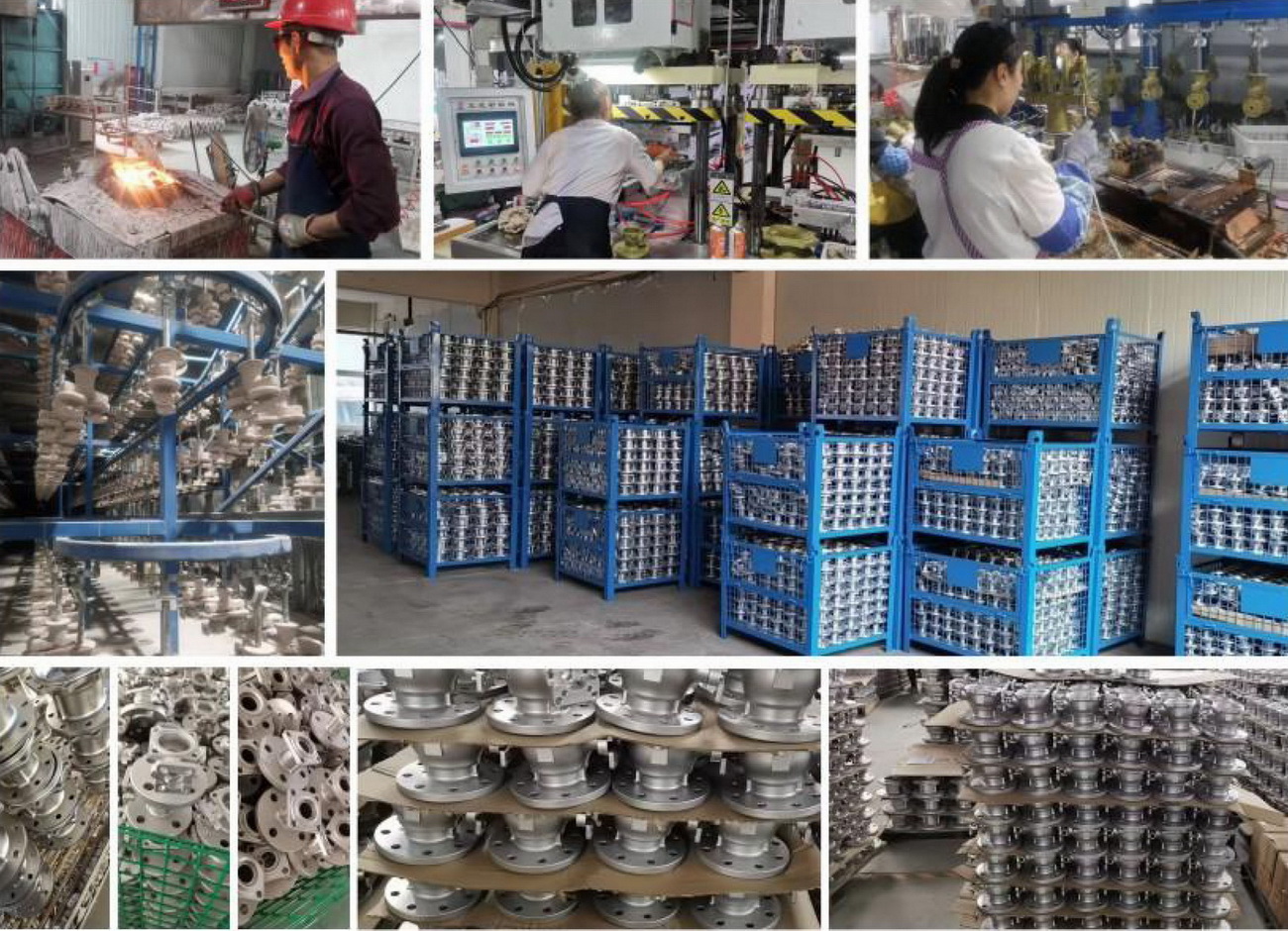
Investment casting production and finished precision cast parts.
Precision casting parts are metal components produced by investment casting, a lost-wax process in which a wax pattern is formed, coated with a ceramic shell, dewaxed and then filled with molten metal. The raw casting is subsequently finished by heat treatment, CNC machining and surface treatment until it matches a customer drawing. Buyers move to this process when geometry is complex, wall sections are thin, or dimensional consistency matters more than the lowest possible piece price.
This guide is written for the evaluation and execution stage of a sourcing project: the point at which a drawing, a sample or a target application already exists, and the open questions are about category, process fit and supplier capability rather than general awareness. It defines the three categories buyers ask about most often, explains the OEM and custom drawing vocabulary used in quotations, and shows how tolerance grades and wall thickness are actually handled.
The Short Answer
- Process: precision investment casting (lost-wax) with ceramic shell building, including silica sol systems.
- Category examples: engine mount housings, footrest brackets and gearbox housings, alongside valve, fluid, hardware, machinery and consumer families.
- Tolerance reference: ISO 8062-3:2007 defines dimensional tolerances for investment castings, typically achieving grades CT4 to CT6.
- Wall thickness: agreed on the drawing during quotation, because the achievable minimum moves with part size, alloy and geometry.
- Lead-time reference: samples 20-30 days; mass production 30-45 days after sample approval.
Why Cast Parts Alone Is Not a Buying Specification
Cast parts describes a group of processes, not one product. Sand casting, die casting and investment casting differ in tooling, achievable surface finish, minimum section and economic order size. When an RFQ states only cast parts, three suppliers may quote three different processes, three different tooling costs and three different quality levels, and the inquiry usually has to be re-opened before a real comparison is possible.
The practical fix is to name three things in the inquiry: the process family, the part category and the controlling drawing. Die casting uses reusable metal dies and is generally chosen for high volumes of non-ferrous parts. Sand casting uses expendable sand moulds and is often selected for larger, heavier components where surface finish is less critical. Investment casting uses an expendable wax pattern and a ceramic shell, which is why it is selected for complex geometry, thin or uneven sections, and parts that must look presentable with limited finishing.
Process choice inside investment casting also matters. The silica sol process accounted for 50.78% of investment casting revenue share in 2025 (Mordor Intelligence), a figure that reflects its precision capabilities rather than its cost position. Buyers who specify cast parts without specifying silica sol, sand or another shell system are effectively leaving the decision to the supplier.
Precision Casting in 2026: The Market Background Behind Buyer Decisions
Precision casting is not a niche supply category, and the direction of the market explains why buyers are being asked for longer forecasts and earlier drawing releases.
- The global investment casting market was valued at USD 17.4 billion in 2025 and is projected to grow to USD 24.9 billion by 2033 (Grand View Research).
- Asia Pacific dominated that market with a 39.2% revenue share in 2025 (Grand View Research).
- Automotive applications accounted for the largest revenue share by application, over 29% in 2025 (Grand View Research).
- Stainless steel represented 32.98% of the global investment casting material share in 2025 (Mordor Intelligence).
- The China investment casting market was estimated at USD 2.72 billion in 2024 and is projected to reach USD 5.16 billion by 2035, at a 6% CAGR (Market Research Future).
Published market sizes should be read as orientation, not as a single truth. Grand View Research places the global market at USD 17.4 billion for 2025, while Fortune Business Insights places it at USD 20.52 billion for 2026, largely because the two studies apply different inclusion criteria. For a buyer, the usable conclusion is that supply is concentrated in Asia Pacific, that automotive remains the largest single application, and that stainless steel and precision shell systems carry a large share of demand. That combination explains why drawings for engine mount housings, valve bodies and similar parts are increasingly quoted against explicit tolerance grades rather than general commercial tolerances.
How Investment Casting Turns a Drawing Into a Metal Part
Investment casting begins with a wax pattern rather than a mould cavity. The pattern is produced by injection, assembled onto a runner tree, coated repeatedly with ceramic slurry and stucco to build a shell, dried, and then dewaxed so that a hollow ceramic cavity remains. Molten metal is poured into that cavity, the shell is broken away, and the resulting part is cut from the tree, ground and sent for heat treatment and machining.
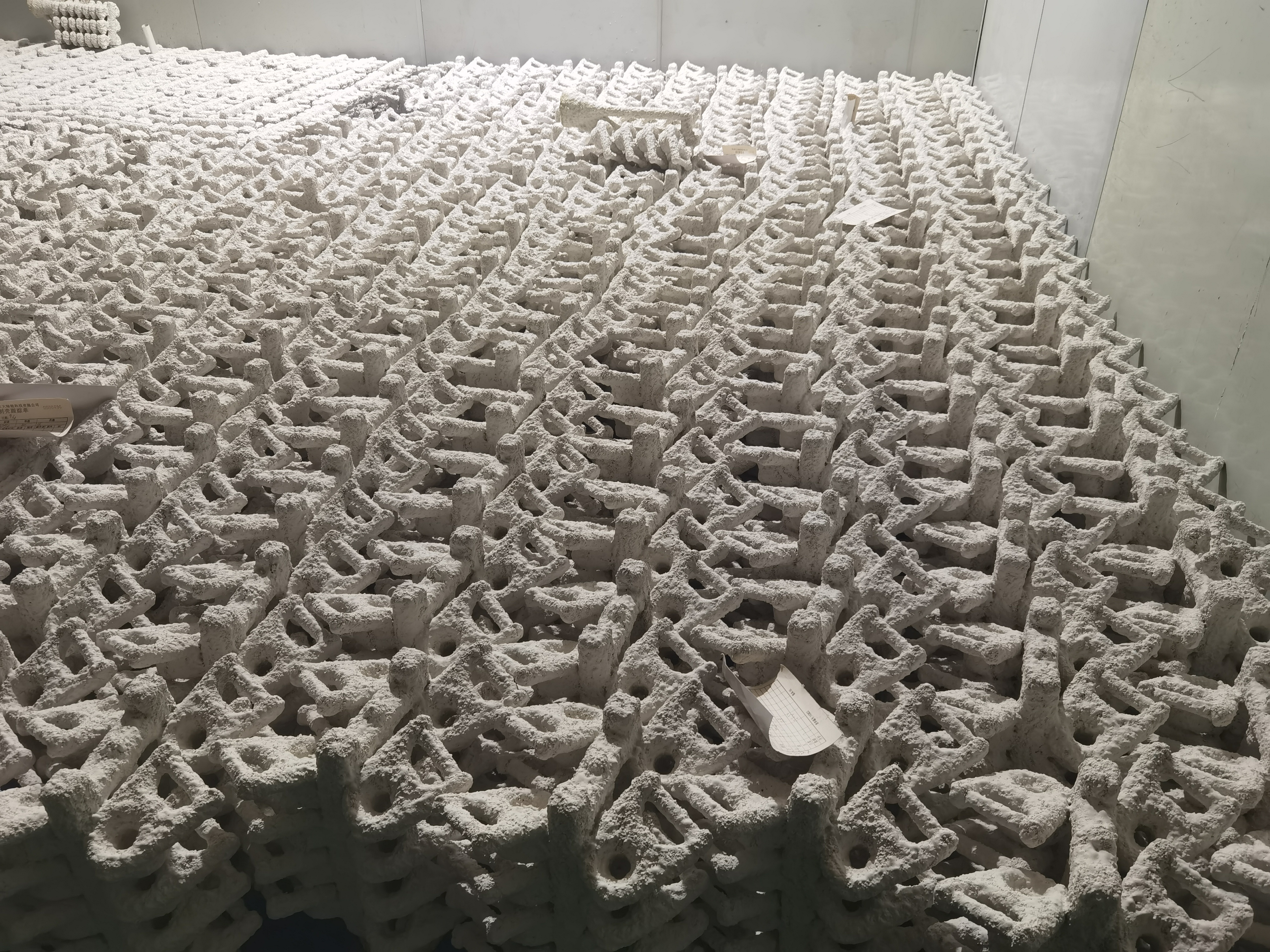
Ceramic shell moulds: the expendable tooling at the centre of the investment casting process.
SHANGHAI NTC TECHNOLOGY CO., LTD. is a Shanghai-based precision casting and machining company, founded in 2022, that produces investment cast parts to customer drawings for buyers in Europe, North America, Japan, South Korea and Southeast Asia. Its factory covers 2,000 square metres with 20 employees, and is equipped with wax pattern injection production lines and automated ceramic shell coating lines. Precision investment casting capacity is 10,000 pieces per month, depending on part size, weight, material and product complexity, and that figure becomes flexible across other manufacturing processes.
For a buyer, three capability numbers usually decide whether a supplier can be used at all. At NTC, sample production lead time is 20-30 days and mass production lead time is 30-45 days after sample approval. The minimum order quantity for precision investment casting is 100 pieces, and it is negotiable for prototypes and trial orders. Parts are accepted based on customer drawing specifications, and acceptance inspection is carried out according to those drawings.
OEM, ODM and Build-to-Print: The Terms Behind a Cast Parts RFQ
These three terms appear in almost every cast parts quotation, and they are frequently used loosely. Understanding which one applies to a project determines who owns the design, who carries the tooling risk and what the supplier is allowed to change.
What each term means in practice
- OEM production: the part is manufactured to the buyer's design and supplied under the buyer's brand. The supplier executes; the buyer owns the specification.
- Build-to-print: manufacturing strictly to the buyer's drawing and specification, with acceptance inspection performed against that drawing. The buyer's document set is the single controlling reference.
- ODM: the supplier contributes to product development and design rather than only executing a finished drawing, and may extend into custom metal parts manufacturing.
- Custom drawing: the document package that turns an application requirement into a manufacturable part - dimensions, tolerances, material, finishing and inspection criteria.
NTC provides precision investment casting, precision CNC machining, surface and heat treatment, and metal material customization, together with OEM production, ODM, build-to-print and custom metal parts manufacturing services. In an OEM or custom project, customization covers material grade, product geometry and shape, overall dimensions, single piece weight, wall thickness, casting tolerance, surface roughness, heat treatment, CNC machining and surface treatment, and can extend to logo, assembly and packaging.
What a Custom Drawing Should Control
| Drawing Item | Why It Changes the Quote |
|---|---|
| Material grade | Drives mechanical properties, corrosion behaviour and raw material cost; custom material grades are available for investment cast parts. |
| Product geometry and shape | Determines whether investment casting is the right process at all, and how complex the wax tooling becomes. |
| Overall dimensions and single piece weight | Feeds capacity planning, piece price and freight calculation. |
| Wall thickness | Thin or uneven sections must be reviewed before tooling is cut, because they influence filling and dimensional stability. |
| Casting tolerance | Sets the acceptance band and the amount of inspection required. |
| Surface roughness | Decides whether additional finishing is needed after casting. |
| Heat treatment condition | Controls hardness and mechanical properties; heat treatment is a separately quoted process step with its own lead time. |
| CNC machining scope | Defines which features are machined after casting, and to what dimensional or geometric tolerance. |
| Surface treatment | Polishing, sandblasting, passivation, plating, painting or powder coating each carry their own process route. |
| Logo, assembly and packaging | Typical OEM requirements that are quoted as part of customization rather than as an afterthought. |
Tolerance Grade and Wall Thickness: Where the Drawing Gets Specific
Tolerance on a casting is expressed as a grade rather than as a single figure, because the permissible deviation scales with the nominal dimension. ISO 8062-3:2007 defines dimensional tolerances for investment castings, typically achieving grades CT4 to CT6. Buyers sourcing pressure-containing parts should also be aware that ASTM A703/A703M is the standard specification for steel castings, general requirements, for pressure-containing parts, which is relevant to valve bodies, pump components and similar fluid equipment.
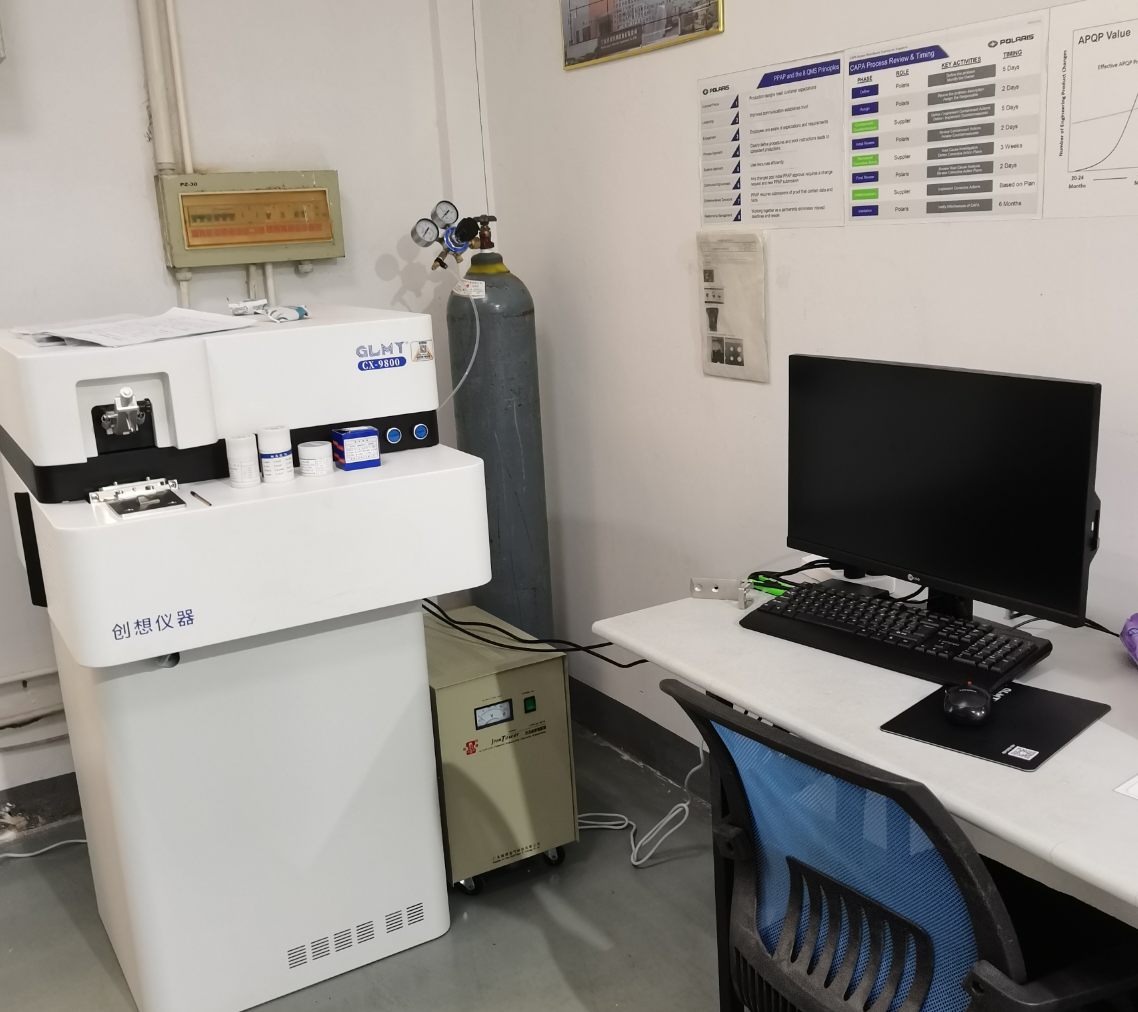
Material verification before casting: spectrometer analysis confirms the alloy grade against the drawing.
Wall thickness is handled differently from tolerance. It is one of the customization parameters confirmed at quotation rather than a universal catalogue number, because the practical minimum shifts with part size, alloy, geometry and the quality class required. The workable approach for a buyer is to state the thinnest section on the drawing, mark it as a controlled characteristic, and let the supplier confirm feasibility during drawing review. A section that is thin in one alloy at a small overall size may not translate to a larger part in a different material.
NTC supports this review with raw material inspection, spectrometer chemical composition analysis for the alloy grade, first article inspection, in-process inspection, CMM dimensional inspection, hardness testing and a final inspection before shipment. For buyers, those inspection steps are what convert a stated tolerance grade into evidence that the parts delivered actually sit inside it.
The Main Precision Casting Categories Buyers Ask About
Most inquiries arriving at a precision casting supplier fall into three functional categories. They differ in load case, exposure and the features that have to be machined after casting.
Engine Mount Housings
Engine mount housings locate and support an engine or an engine mounting element against a frame, so they carry both static load and vibration. In casting terms they are housings: wall sections must be reasonably uniform, mounting faces usually have to be machined flat and parallel, and the part must hold its shape through heat treatment. Buyers normally specify the alloy grade, the machined faces and the casting tolerance grade together, because a housing that meets its dimensional tolerance but distorts after heat treatment is not usable.
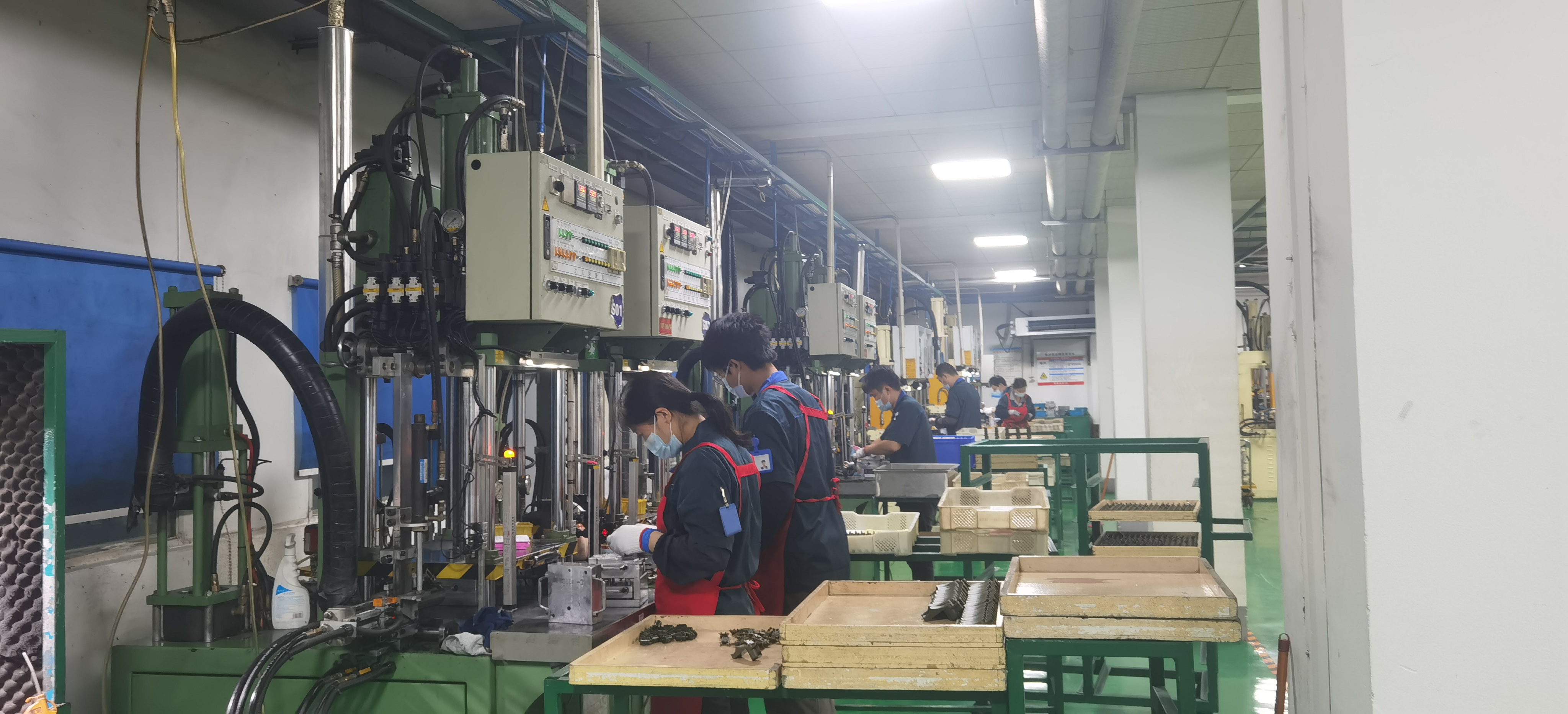
Wax pattern injection: the first step that determines whether a housing or bracket geometry can be cast at all.
Footrest Brackets
Footrest brackets are structural brackets that support rider or operator footrests on motorcycles and scooters. They are load-bearing and exposed, so material grade and surface finish are usually specified as a pair, and appearance matters as much as strength on visible parts. Where the bracket combines a cast body with machined mounting holes, the drawing should state which features are as-cast and which are machined.
Gearbox Housings
Gearbox housings enclose gears, shafts and bearings - frequently in power tools and small transmission assemblies. Bore alignment and wall uniformity drive the process decision here more than raw strength, because a housing that is dimensionally consistent but slightly bowed will not hold bearing alignment. This is the category where investment casting is most often compared with die casting, and where the tolerance grade on the drawing usually decides the outcome.
The Wider Family List
Housings and brackets are the entry point, but a full-process investment casting supplier is usually asked to cover a broader set of families. NTC produces the following, among other industrial and civil products:
- Automotive and motorcycle: Auto Part Castings; Automobile and motorcycle castings.
- Power tools: Power tool components castings.
- Marine and architectural hardware: Stainless steel marine hardware castings; Stainless steel architecture daily-used hardware castings.
- Copper-based parts: Copper alloy castings.
- Fluid, valve and food equipment: Fluid Equipment Parts; Food Machinery Parts; Stainless steel pipe and valve castings; Flowmeter Accessories.
- Hardware and fittings: Door Control Fittings; Lock hardware; Furniture Hardware; Construction Hardware; Tableware hardware.
- Industrial machinery: Mechanical parts; Engineering machinery parts; Industrial sewing machine parts; Textile Machinery Parts.
- Sports and leisure: Sport Facility Parts.
The point of listing families together is not to suggest that one alloy or one finishing route fits all of them. It is that a supplier able to cast across automotive, fluid, hardware and machinery families can usually offer a shorter route from drawing to sample for buyers whose product range spans more than one sector.
From Inquiry to Shipment: A Step-by-Step Walkthrough
- Drawing and specification review. The buyer supplies the drawing, material grade, tolerance grade, surface requirement, quantity and target market. Where no drawing exists, a sample can be used as the starting point.
- Feasibility review. Thin sections, wall thickness, machining allowance and the features that must be machined after casting are reviewed before tooling is committed.
- Quotation and commercial terms. MOQ is set according to product size, with 100 pieces as the reference for precision investment casting. Delivery terms are FOB or CIF. Payment terms are 50% T/T in advance and 50% T/T before shipment.
- Tooling and sampling. Wax injection tooling is produced and the first samples are cast. Sample lead time is 20-30 days, and prototypes and trial orders are supported.
- Sample approval. Acceptance criteria follow the customer drawing; the sample is approved against that drawing before mass production is released. For hybrid parts, machined features may be sampled separately, with 10-20 days for CNC sample lead time.
- Mass production. Mass production lead time is 30-45 days after sample approval, at a precision investment casting capacity of 10,000 pieces per month depending on size, weight, material and complexity.
- In-process quality control. Raw material inspection, spectrometer chemical composition analysis, first article inspection, in-process inspection, CMM dimensional inspection, hardness testing and visual inspection run through the order.
- Finishing. Heat treatment or surface treatment - polishing, sandblasting, passivation, plating, painting, powder coating, black oxide, annealing, normalizing, quenching, tempering or solution treatment - typically takes 7-20 days depending on process, quantity and technical requirements.
- Final inspection and shipment. Final inspection is carried out before shipment, and inspection reports are issued in support of the delivery.
- After-sales. A quality warranty applies to confirmed casting defects, with remote technical and drawing support, quality issue analysis, and rework, replacement or replenishment where a manufacturing defect is confirmed.
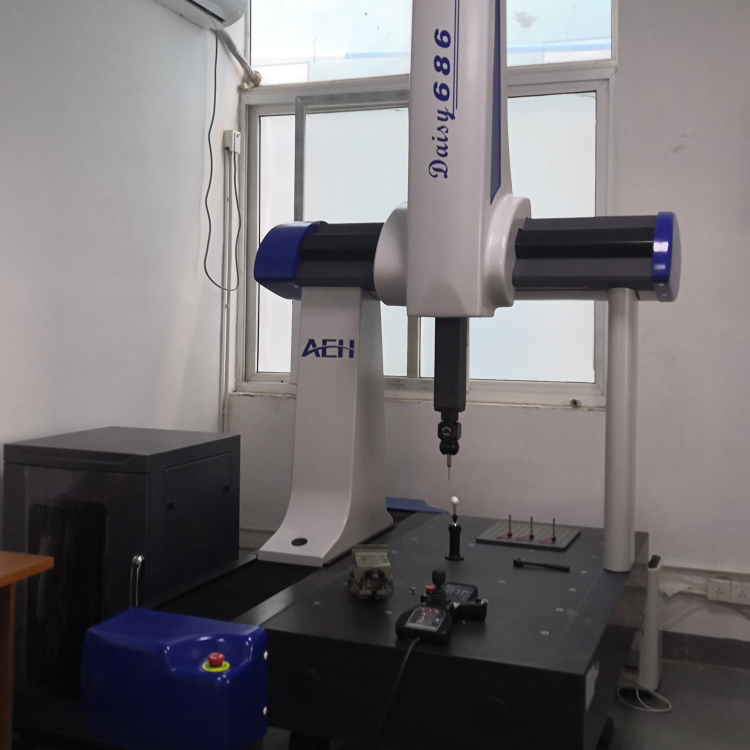
CMM dimensional inspection: converting a tolerance grade on a drawing into measured evidence.
Where Precision Casting Parts Are Used
Investment cast parts from NTC are used across automotive parts, fluid and chemical equipment, hardware for ship equipment, food and medical machinery, building hardware accessories, valves and pipes, fire-fighting equipment, sports equipment, instruments and meters, aerospace and petroleum equipment. Four of these applications show why the category decision comes before the price discussion.
Automotive and Motorcycle Structures
Auto part castings and motorcycle castings cover brackets, housings and structural fittings. With automotive applications holding over 29% of global investment casting revenue share in 2025 (Grand View Research), this is the category where buyers most often require documented material grade and consistent wall sections across repeat orders.
Fluid Handling and Valve Components
Fluid equipment parts, stainless steel pipe and valve castings, and flowmeter accessories are pressure- or flow-related parts. Buyers in this segment typically specify the alloy grade, require material certification and reference a pressure-containing casting standard, which is where ASTM A703/A703M becomes relevant to the specification conversation.
Food Machinery and Tableware Hardware
Food machinery parts and tableware hardware prioritise surface condition and cleanability. Surface treatment options such as polishing, passivation and pickling are usually specified together with the material grade rather than as optional extras.
Building, Furniture and Door Hardware
Door control fittings, lock hardware, furniture hardware and construction hardware are high-mix, appearance-sensitive parts. Casting tolerances here are frequently set to avoid visible gaps after assembly, and the casting tolerance grade determines how much hand finishing is required.
Capability Comparison: Matching the Production Service to the Part
Once the category is clear, the next question is which production service carries the order. The table below summarises the routes available from NTC for the same finished part.
| Service | Customization Scope | Sample Lead Time | Mass Production Lead Time | MOQ | Quality Control Focus |
|---|---|---|---|---|---|
| Precision investment casting | Material grade, geometry and shape, overall dimensions, single piece weight, wall thickness, casting tolerance, surface roughness, heat treatment, CNC machining, surface treatment | 20-30 days | 30-45 days after sample approval | 100 pcs; negotiable for prototypes and trial orders | Raw material inspection, spectrometer chemical composition analysis, first article inspection, in-process inspection, CMM dimensional inspection, hardness testing, visual inspection, final inspection |
| Precision CNC machining | Material, geometry and shape, overall dimensions, single piece weight, dimensional and geometric tolerance, surface roughness, turning, milling, drilling, boring, threading, surface treatment | 10-20 days | 20-35 days after sample approval | 1 pc for prototypes; batch MOQ negotiable | Incoming material inspection, first article inspection, in-process dimensional inspection, CMM measurement, projector inspection, hardness testing, surface roughness inspection, thread and gauge inspection, final inspection |
| Surface and heat treatment | Polishing, sandblasting, shot blasting, pickling, passivation, plating, painting, powder coating, black oxide, annealing, normalizing, quenching, tempering, solution treatment, hardness | - | 7-20 days typical | Negotiable based on part specifications, treatment process and order quantity | Visual inspection, surface roughness inspection, coating thickness inspection, hardness testing, dimensional inspection, adhesion inspection, color comparison, final inspection |
| Metal material customization | Material category, material grade, chemical composition, mechanical properties, hardness, heat treatment condition, applicable standard, material certificate | 20-30 days | 30-45 days after sample approval | Negotiable; prototypes and trial orders supported | Raw material inspection, material certificate verification, spectrometer chemical composition analysis, hardness testing, first article inspection, dimensional inspection, final inspection |
| ODM / build-to-print / custom metal parts | Material, dimensions, tolerance, casting process, CNC machining, heat treatment, surface finish, assembly, packaging | - | Capacity referenced at 10,000 pcs per month, depending on product size, weight and process | Negotiable based on product specifications, material and manufacturing process | Incoming material inspection, first article inspection, in-process inspection, final inspection; CMM dimensional inspection, spectrometer material analysis, hardness testing, projector inspection |
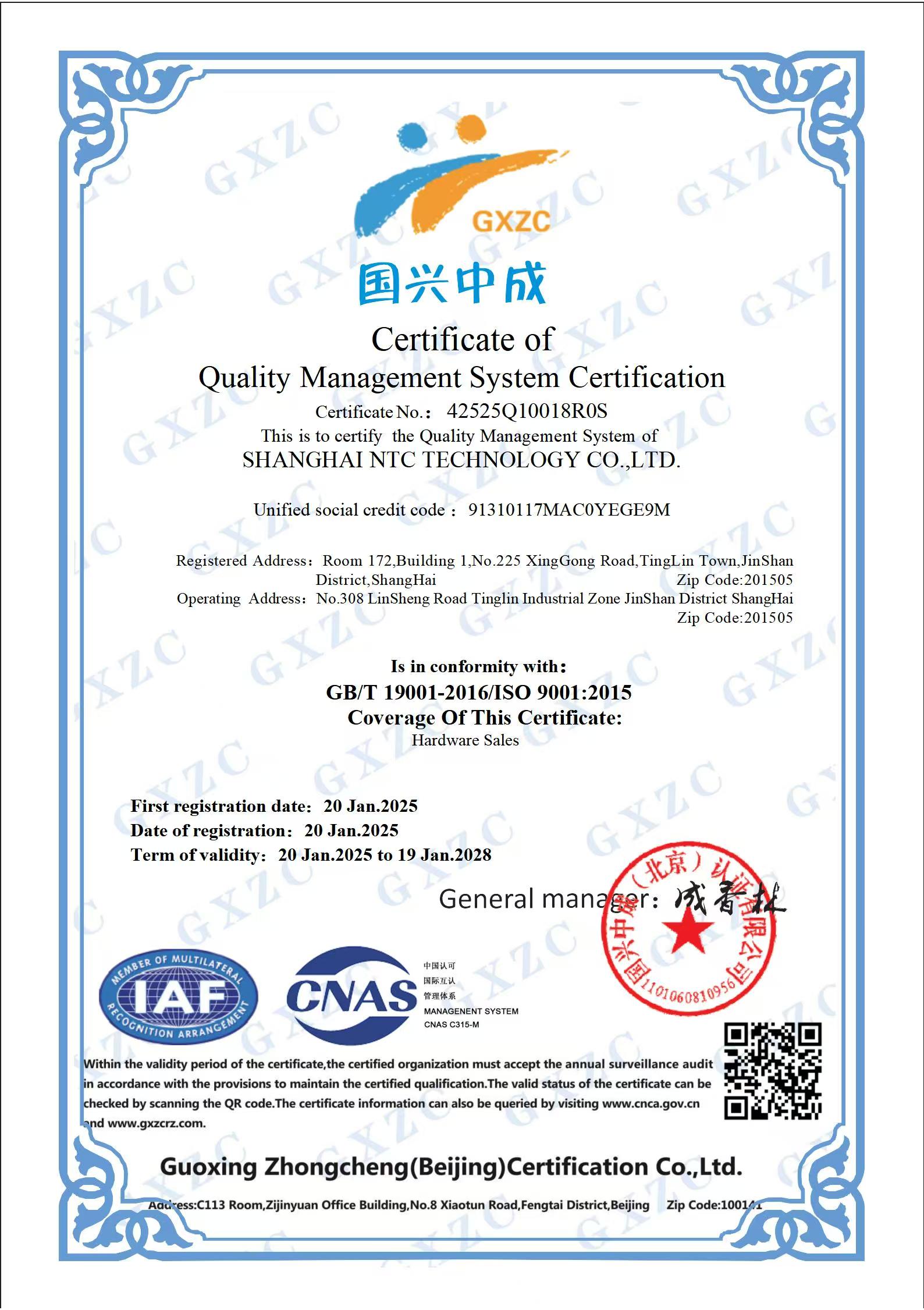
ISO 9001:2015 management system certification, certificate number 42525Q10018R0S.
FAQ: Precision Casting Parts for OEM Buyers
Which quality certification should I verify before placing an order?
The certificate to check first is the management system certificate. NTC holds an ISO 9001:2015 management system certificate, number 42525Q10018R0S, issued by GXZC on 20 January 2025 and valid until 19 January 2028, against the GB/T 19001-2016 standard, with the certificate scope described as hardware sales business. Beyond the certificate, the operative quality standard for a cast parts order is the drawing itself: products are accepted based on customer drawing specifications, and acceptance inspection is carried out according to those drawings. For pressure-containing steel castings, buyers frequently reference ASTM A703/A703M in the specification.
Can a manufacturer produce OEM auto part castings to my own drawing?
Yes, provided the drawing package is complete. NTC provides OEM production, ODM, build-to-print and custom metal parts manufacturing services on top of precision investment casting. Customization covers material grade, product geometry and shape, overall dimensions, single piece weight, wall thickness, casting tolerance, surface roughness, heat treatment, CNC machining and surface treatment, and OEM projects can also include logo, assembly and packaging. Materials span stainless steel, alloy steel, carbon steel, aluminum, copper, gray iron and ductile iron, and custom material grades are available for investment cast parts. Auto part castings and automobile and motorcycle castings are among the families produced, with acceptance determined by the customer drawing.
How are order quantity, payment and delivery terms structured?
For precision investment casting, the reference minimum order quantity is 100 pieces, and MOQ is negotiable for prototypes and trial orders. For OEM production, MOQ is set according to the size of the product, and for prototypes the CNC machining route can start from 1 piece, with batch MOQ negotiable. Delivery terms are FOB or CIF, and payment terms are 50% T/T in advance with the remaining 50% T/T before shipment. Unit price is not published, because it depends on part size, single piece weight, material grade and the process route - casting alone, casting plus heat treatment, or casting plus CNC machining and surface treatment.
Can I approve a sample before mass production begins?
Samples are the standard first step for a new drawing. Sample production lead time is 20-30 days for precision investment casting, and 10-20 days for precision CNC machining work. Prototypes and trial orders are supported, and acceptance criteria follow the customer drawing, so the sample is judged against the same specification that will apply to mass production. Nothing proceeds to volume production until the sample has been approved.
What lead time and capacity should I plan for after sample approval?
Mass production lead time is 30-45 days after sample approval, and precision investment casting capacity is 10,000 pieces per month, depending on part size, weight, material and product complexity. If the order includes heat treatment or surface treatment, that step typically adds 7-20 days depending on the process, order quantity and technical requirements, and CNC machining mass production runs 20-35 days after sample approval. Buyers planning a first order can request a sample against their own drawing, or request a quotation with the drawing attached, to confirm which of these steps applies to their part before committing to a schedule.
Conclusion: Start With the Category, Then the Process
Precision casting parts are defined by the process that makes them, not by a generic material list. Investment casting suits complex geometry, thin sections and dimensional consistency; the category - engine mount housing, footrest bracket, gearbox housing or one of the wider hardware, valve, fluid and machinery families - determines which features must be machined and which tolerance grade has to be held. OEM and custom drawing terms then decide who owns the design and what the acceptance criteria are, while tolerance grades under ISO 8062-3:2007 and a drawing-controlled wall thickness specification set the measurable limits.
A buyer who states the process, the category, the drawing and the acceptance criteria in the first inquiry avoids the most common cause of re-quoted cast parts projects. For suppliers, the same clarity shortens the path from drawing review to approved sample.
Next Step: Sample or Quote for Your Drawing
If you have a drawing for a housing, bracket or hardware part, the fastest way to validate fit is a sample produced against that drawing. Send your drawing, target material and annual quantity, and the team will confirm process route, tolerance grade, MOQ and lead time.
- Company: SHANGHAI NTC TECHNOLOGY CO., LTD.
- Website: www.shntcmachinery.com
- Email: Stanley770826@ntcmachine.com
- WhatsApp: +86 186 2180 6400
- Address: No. 308 Linsheng Road, TingLin Industrial Zone, JinShan District, Shanghai 201505, China
- Download the full capability catalogue: SHANGHAI NTC TECHNOLOGY CO., LTD. 2026 Brochure (PDF)
Sources for third-party market and standard references: Grand View Research (investment casting market), Mordor Intelligence (material and process share), Market Research Future (China investment casting market), Fortune Business Insights (global player and market comparison), ISO 8062-3:2007, ASTM A703/A703M.
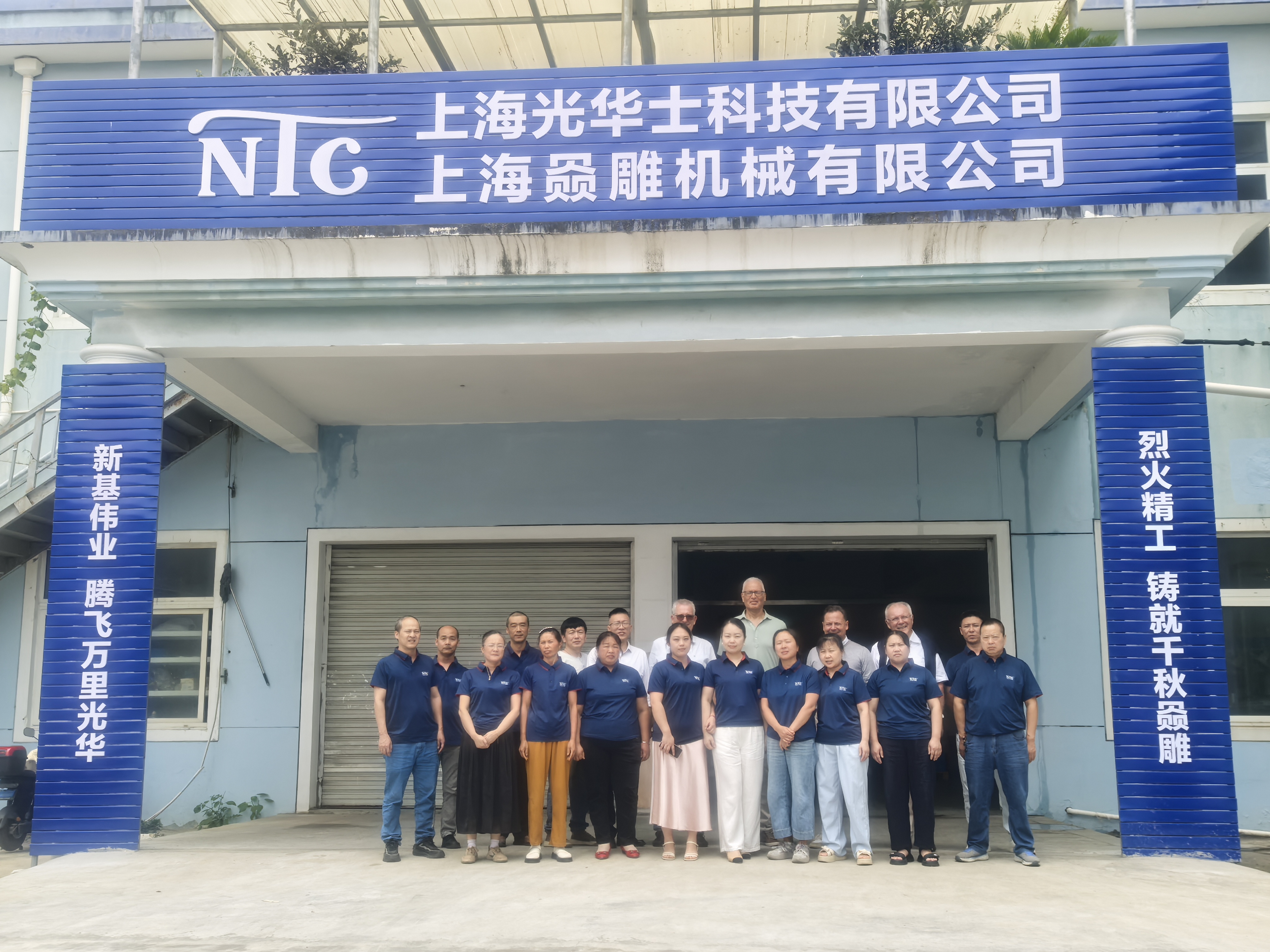
Buyer visits and factory audits are part of the acceptance process for OEM cast parts projects.
Have Questions or Need More Details?
Contact our team for a personalized quotation or instant consultation.
Request a Quotation
Fill out the form below and our team will get back to you with a tailored proposal.
WhatsApp Direct Chat
Prefer to chat in real-time? Message us on WhatsApp for instant assistance & quick answers.
- Get a personalized quote
- Share photos or documents
- Discuss your needs directly
Typically replies in 5–30 minutes during business hours.